

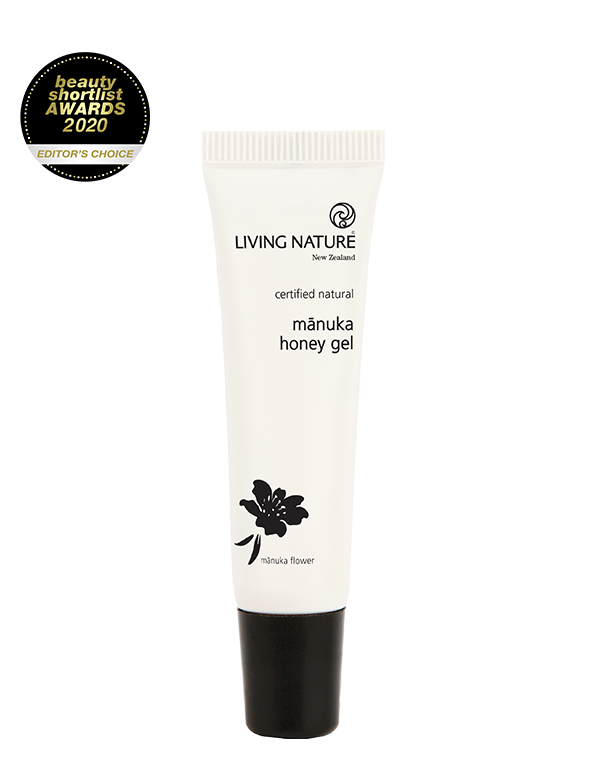


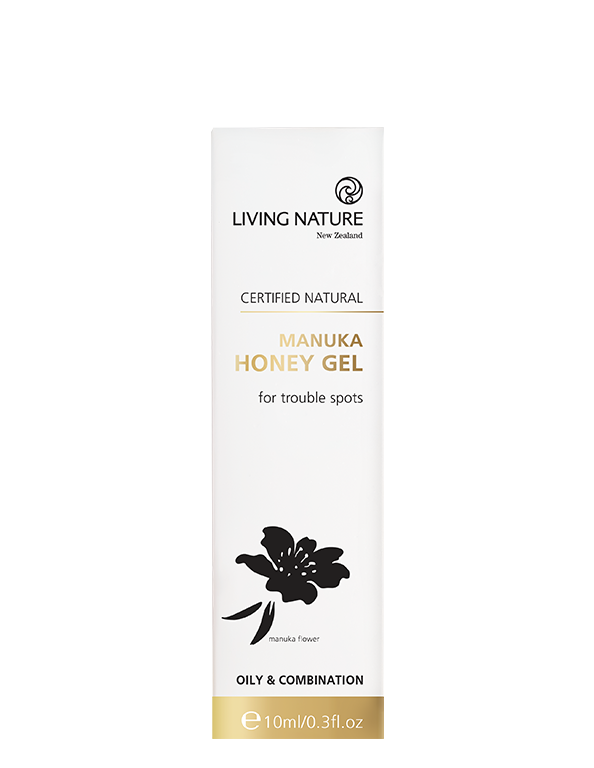
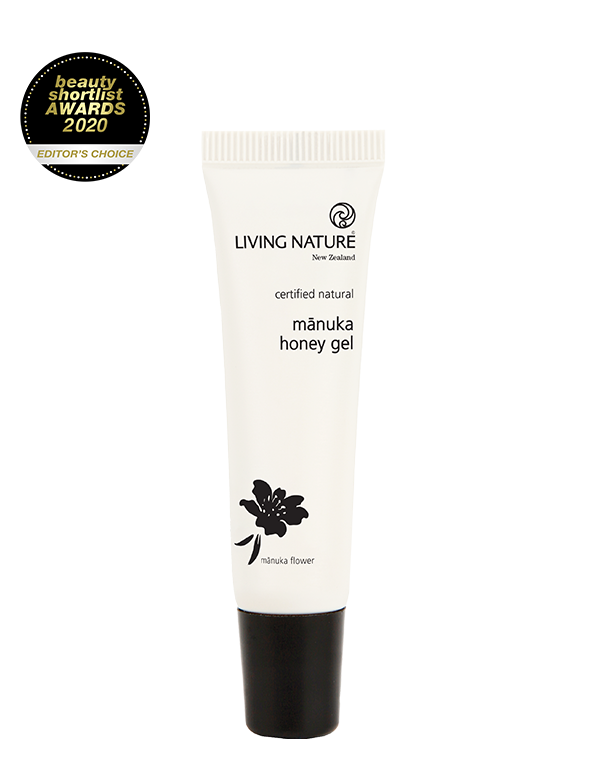
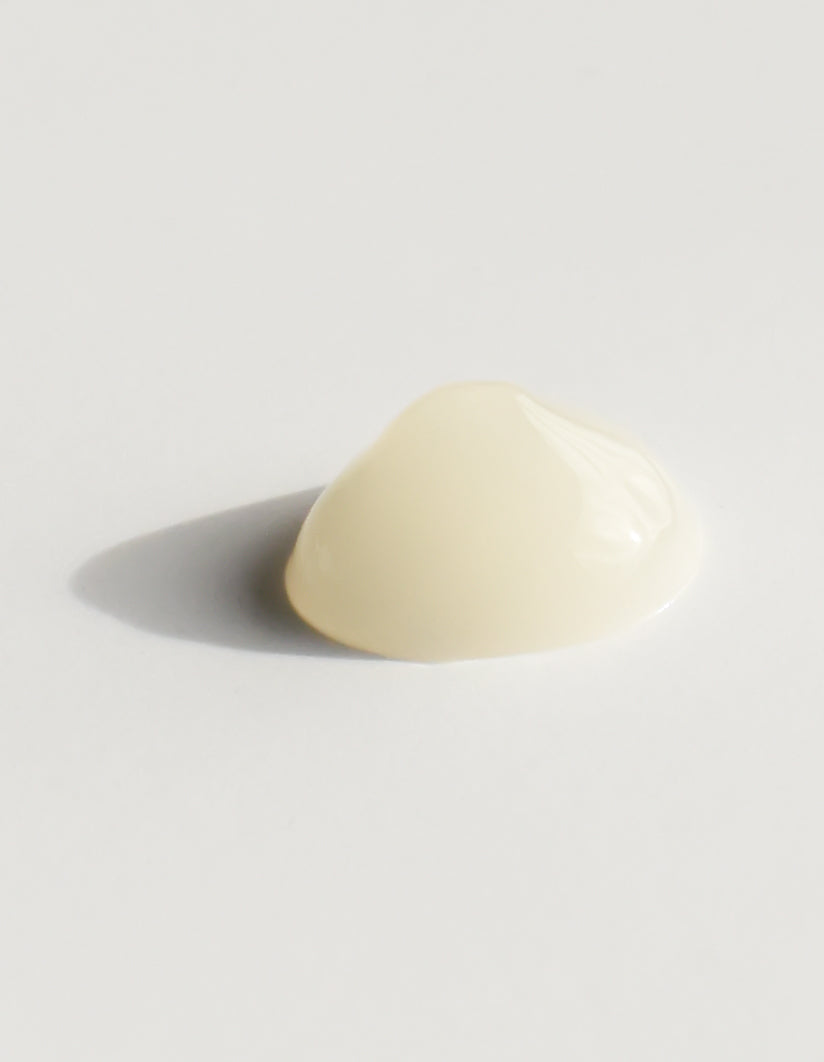
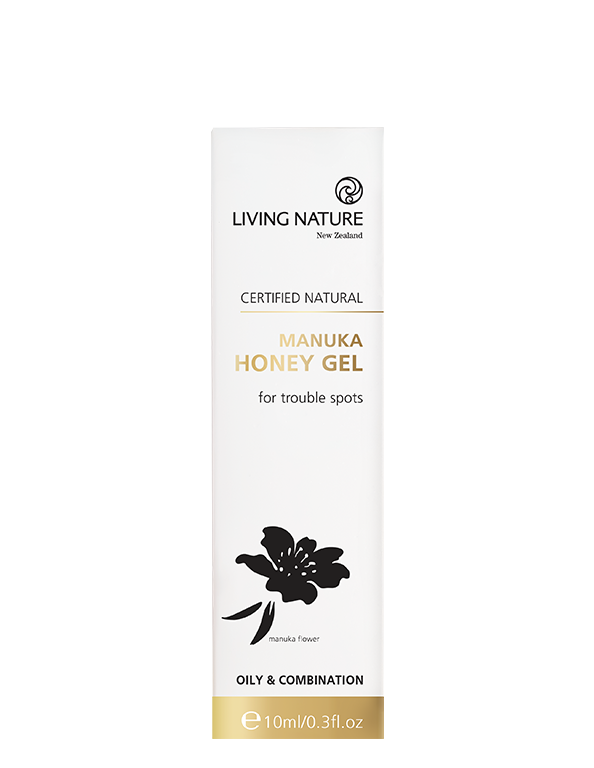
Mānuka Honey Gel 10ml
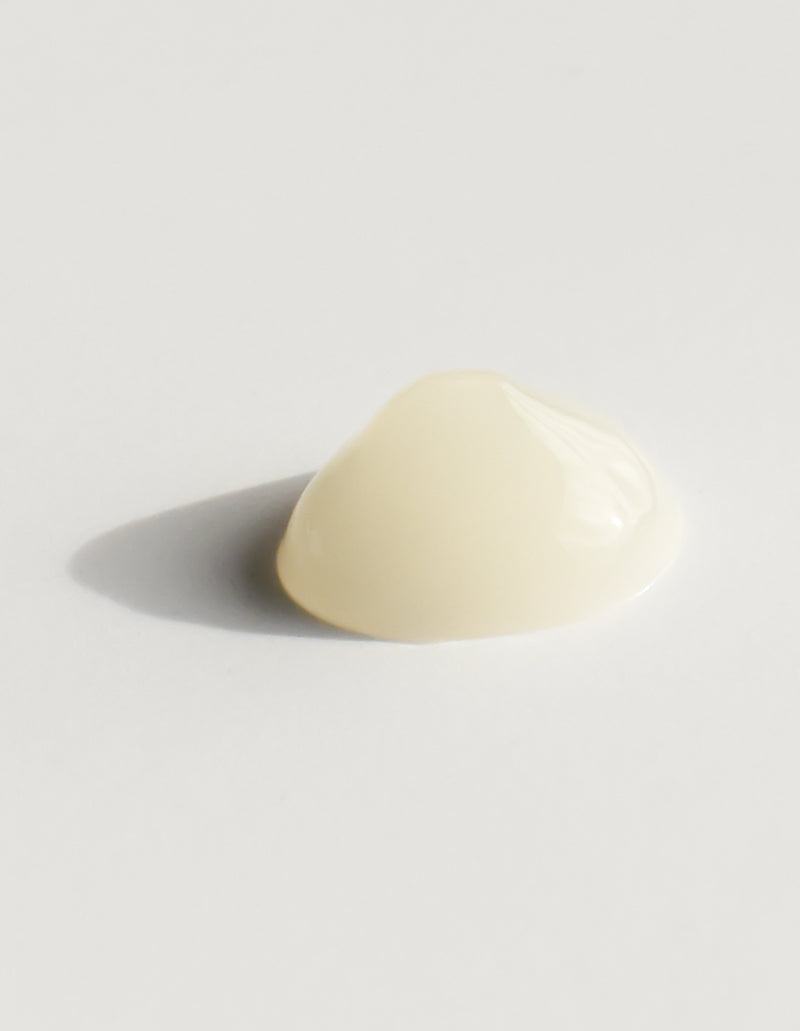
Living Nature's certified natural Mānuka Honey Gel is Living Nature's most popular product. Mānuka Honey Gel is an effective, soothing gel recommended for blemish-prone skin and trouble spots including scratches, insect bites and cold sores. This potent blend combines active Mānuka honey for skin healing with Mānuka oil to help protect, cleanse and soothe the skin. Active Mānuka Honey is one of nature's miracle healers, and Mānuka oil is a super protector - both with proven skin benefits. Think of it as nature's first aid for your skin. Mānuka Honey Gel is suitable for blemish-prone skin and trouble spots including scratches, insect bites, cold sores, eczema, rosacea, psoriasis.
Suitable for all skin types.
TO USE: Apply as often as needed with clean hands or a cotton-bud.
INGREDIENTS: Aqua (water), Mel (mānuka honey), Leptospermum scoparium (mānuka) branch/ leaf oil*, Xanthan gum, Phormium tenax (harakeke) extract, Melaleuca alternifolia (tea tree) leaf oil*, Tocopherol (vitamin E), Salicylic acid. *From natural essential oils: Limonene, Linalool.
Always refer to the product packaging for the most current list.