living nature home Free shipping
on all orders over $100


Home Customer Testimonials Why Safe and Natural? Our Ingredients Contact Us FAQ's My Account
 
Face Body Cosmetics Hair Mother & Baby Men Gifts Healing My Cart


Questionable Ingredients

Some ingredients in shampoos, toothpastes, skin creams, and other personal care products, fabric softeners, make-up, haircare products, colognes, perfumes and other scented products may be damaging to your health.

Many chemicals found in cosmetics don’t cause obvious immediate signs of toxicity, but might slowly damage us through repeated use on our skin. (Darbre, 2003; Harvey, 2003)

Many drugs on the market today are administered through transdermal skin patches, which have been shown to be up to 95% more effective than oral medication. This demonstrates that the skin, the largest organ of the body and our first line of immunity, absorbs products and their ingredients.

At Living Nature we choose to avoid using the following ingredients in our natural product range:

Artificial Colourings
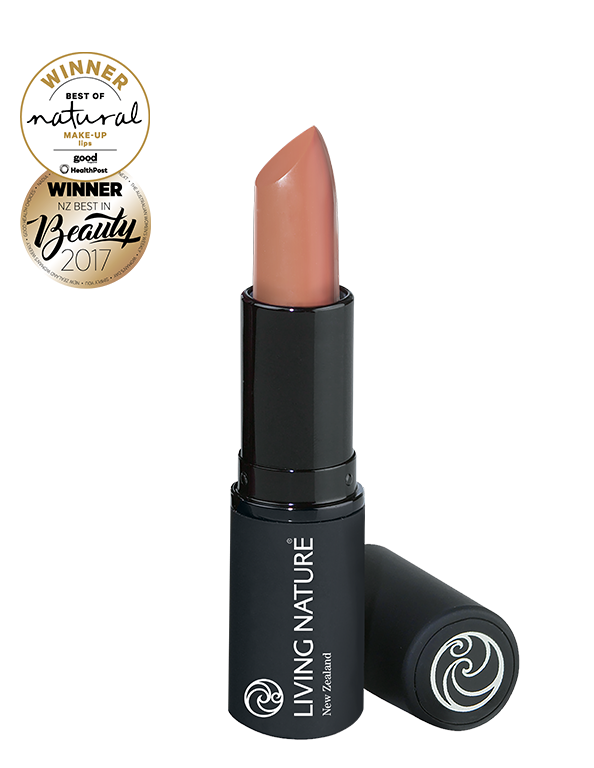
We follow the BDIH guidelines for natural cosmetics which say that synthetic colouring agents are to be avoided. Certain types of artificial dyes, lanolin, and added fragrances in lipstick can cause drying and cracking of the lips. A condition called cheilitis, dermatitis of the lips, can occur due to an allergic reaction to lip products since the skin of the lips is quite thin.

Some companies will omit to tell you that some of the ingredients used in their products can sometimes be health hazards. But this is no reason to be uninformed. No one wants to be at risk for allergic reactions, irritations and dermatitis. Ingredients from lipsticks are going to be absorbed into your body as you moisten your lips throughout the day, and especially when you eat. The bottom line is to pay attention to what the ingredients are on any cosmetic label.

Synthetic Paraben Preservatives
One of the necessities of producing a natural skincare is that we find something that preserves it, and sustains it for a length of time so it can stay fresh until used. One of the earliest preservatives that we used was Gum Benzoin. It was used as early as the times of the Pharaohs for preserving mummies. Various parts of plant extracts over the years have been used as a preservative. What was difficult about these plant extracts was some contained a very pungent smell and were also reactive when used in the quantities required to preserve a cream. It was really only this century that creams have been able to last more than a few days.

In the 1930s, scientists developed something that could preserve creams. Synthetic Methyl, Ethyl and Propyl Parabens were developed from benzoic acid. These parabens were deemed excellent preservatives. They weren’t really allergenic, were low cost, they didn’t have that pungent smell and they incorporated reasonably easily into creams and functioned as a broad spectrum microbial bioside. Parabens are very effective at killing most bacteria, fungus and yeasts. Hence that’s really when skincare companies starting producing skincare.

Parabens have now been found in cancerous tumours, and particularly in breast tissue (Darbre et al (2004)). The source of these parabens is not yet clear as parabens can also be found in some foods, so there are internal and external possibilities to consider. Kyoto University (Japan) has studied how external parabens or topically applied parabens can penetrate the skin and get into the blood stream. Heildburg, Reading and Brunel Universities have carried out various studies regarding likely effect of parabens on our bodies. They found that alkyl hydroxy benzoate preservatives (methyl-, ethyl-, propyl-, and butylparaben) are weakly estrogenic. In other words, these preservatives have the ability to mimic estrogen in the body (oestrogenic), with butylparaben being the most potent.

There are several theories about what is happening, including the oestrogen mimicking factor of parabens and how that’s impacting on cancerous tumours. Our own theories glean from all the research seen. We know through Kyoto University studies that topically applied parabens can be absorbed into the bloodstream. Numerous studies with Endocrine Disrupting Chemicals (“EDC”s) have shown that they (EDCs) can get stored in fatty tissues and our major organs (ref www.epa.com).

Because the normal healthy cells around the deposit of synthetic paraben cannot form in their normal way, you can get abnormalities. That’s one of the things which may be a result of using strong synthetic preservatives. Alternatives and most plant preservatives don’t have the strength that synthetic preservatives do. They tend to break down when they come into contact with air and warmth causing oxidisation. This process can also release new beneficial compounds for the body, all derived from the natural plant extracts.

This is what we have aimed to do with the Living Nature preservative system.

However more research is needed to measure the effects of doses in humans to see if they are similar to those in the animal experiments (Routledge et al 1998). If the human exposures are significant - as far as being oestrogenic, these findings could assist studies which are seeking to help explain why the sperm counts have fallen by half over the past 50 years, and breast cancer in women is an increasing threat.

Routledge, E.J., J Parker, J. Odum, J. Ashby and JP Sumpter 1998 Toxicology and Applied Pharmacology, 153, 12-19
Darbre, PD A Aljarrah, WR Miller, NG Coldham, MJ Sauer and GS Pope 2004 Journal of Applied Toxicology 24 5-13

Imidazolidinyl Urea
The most commonly used cosmetic preservative after parabens. It is the second most identified cosmetic preservative causing contact dermatitis according to The American Academy of Dermatology. Also one of many preservatives that release formaldehyde. The substance separates formaldehyde in small amounts causing a contact allergy to either the formaldehyde or the preservative. Exposure to formaldehyde can irritate the respiratory system, cause skin reactions, joint and chest pains, allergies, headaches and ear infections.

Petrolatum
(Vaseline) A petroleum-based grease which exhibits the same potentially harmful properties as mineral oil. May block normal respiration and suffocate the skin. Known to cause allergic skin reactions.

Sodium Lauryl Sulfate (SLS)
Used as a detergent in all types of foaming personal care products from liquid soap and shampoo to toothpaste. SLS is used in testing labs as the standard ingredient to irritate skin. Industrial uses of SLS include garage floor cleaners, engine degreasers and car wash soaps. Medical studies show SLS is absorbed into the body and is retained in the eyes, brain, heart, liver and other organs with potentially harmful long term effects. SLS may retard healing. Exposure to SLS when released from a cleaning agent may cause eye tissue malformation and possibly cause damage to the protein formation in the eyes of young children and infants. Other research has shown that SLS may cause potentially carcinogenic nitrates and dioxins to form in shampoos and cleansers by reacting with commonly used ingredients found in many products. SLS used in toothpaste to create lather, causes microscopic damage to the mouth tissue, providing a protein-rich food source for bacteria which can lead to an increase in gum disease. According to Herloffon B & P, in a study conducted in 1994, the denaturing effect of SLS on the protective mucous layer in the mouth exposes underlying tissues causing recurrent mouth ulcers, and vulnerability to irritant acids in foods. In addition, this allows a greater absorption of other toxins, such as fluoride.

A small amount generates a large amount of foam, and when salt is added, it thickens to give the illusion of being thick and concentrated.

Diethanolamine (DEA) / Triethanolamine
As reported by the CBS Morning News, the National Toxicology Program (NTP) recently found that repeated skin application to a mouse of diethanolamine (DEA) or it's fatty acid derivative Cocamide-DEA, induced liver and kidney cancer.

NTP also emphasises that DEA is readily absorbed through the skin and accumulates in organs, such as the brain, where it may induce chronic toxic effects.

Widely used as a detergent in hand and body lotions, shaving creams, soaps, shampoos and bath powders. It’s principle toxic effect in animals has been attributed to over-alkalinity.

Aluminium
This has only recently been found as a problem mineral. Aluminium is very abundant in the earth and the sea but present only in small amounts in animal and plants tissues. However, it is used in cosmetics and commonly ingested in foods and medicines such as antacids.

There has been a lot of publicity about Aluminium and possible links with Alzeimher’s disease and other brain senility disorders. It is not clear how Aluminium interferes with the activities in the human body. The following is an extract from a public health statement on aluminium in the US:

"Some people who have kidney disease store a lot of aluminum in their bodies. The kidney disease causes less aluminum to be removed from the body in the urine. Sometimes these people developed bone or brain diseases that doctors think were caused by the excess aluminum. Some studies show that people exposed to high levels of aluminum may develop Alzheimer's disease, but other studies have not found this to be true. We do not know for certain whether aluminum accumulation is a result of the disease or its cause. People may get skin rashes from the aluminum compounds in some underarm antiperspirants."

(CAS# 7429-90-5 Public Health Statement for Aluminium, ATSDR US Agency for toxic substances and diseases registry).

Animal Ingredients
It has consistently been demonstrated that animal products do not add benefit to a skin cream. Putting ingredients like collagen, taken from a dead animal does not create the production of collagen in our skin tissue. Collagen can only have an effect by being injected under the epidermal layer. When it gradually breaks down over 6 months to a year and is removed by the blood as toxins and waste product.

Having live plant nutrients available as raw materials that the body can absorb and process and use as building blocks is far more beneficial. Hence the Living Nature products provide nutrient rich oils and extracts that promote and protect the skins natural processes.

Back to top

Ref: Darbre PD, Byford JR, Shaw LE, Hall S Coldham NG, Pope GS Sauer MJ 2003 J.Appl. Toxicol. 23: 43-51 Harvey PW 2003 J. Appl. Toxicol. 23: 285-288


About Us Essentials Store Locations Retail Enquiries Web Affiliates News & Media What the press say  
Buy a gift certificate
  
Living Nature New Zealand, PO Box 193, Kerikeri, Northland
Phone: +64 (0)9 407 7895